Ever tried cutting 1-inch steel with an angle grinder and ended up sweating like you just ran a marathon—only to have warped edges and a headache that lasts three days? Yeah. Me too. I once spent an entire Saturday wrestling with a hacksaw on a rusted-out trailer frame, swearing I’d never touch metal again… until I discovered plasma arc machining.
If you’re knee-deep in home workshops, farm repairs, or small-scale fabrication, understanding the applications of plasma arc machining isn’t just useful—it’s a game-changer. This post cuts through the jargon (pun intended) and delivers real, actionable insights from someone who’s burned through more consumables than I care to admit.
You’ll learn:
- Where plasma cutting shines—and where it absolutely shouldn’t be used
- Real-world examples from automotive, HVAC, and artistic metalwork
- How to avoid the #1 mistake beginners make (hint: it involves amperage and thin sheet metal)
- Expert-backed safety & precision tips that pros won’t tell you for free
Table of Contents
- Why Should Home Workshop Enthusiasts Care About Plasma Arc Machining?
- Step-by-Step: 10 Practical Applications of Plasma Arc Machining
- 7 Best Practices for Clean, Safe Cuts at Home
- Case Study: From Rusty Gate to Backyard Sculpture
- FAQs About Plasma Arc Machining
Key Takeaways
- Plasma arc machining excels at cutting electrically conductive metals from 20-gauge up to 1.5 inches thick.
- It’s widely used in automotive repair, HVAC ductwork, farm equipment maintenance, and custom metal art.
- CNC plasma tables enable precision fabrication previously only possible in industrial shops.
- Never use plasma on non-conductive materials (e.g., wood, plastic)—it simply won’t work.
- Consumable wear, air quality, and material prep dramatically affect cut quality.
Why Should Home Workshop Enthusiasts Care About Plasma Arc Machining?
Let’s be real: unless you’ve got a CNC mill in your garage (and if you do, high five), traditional machining methods hit a wall when you need to slice through thick steel fast. Oxy-fuel torches? Great for thick sections but messy, slow, and dangerous near flammables. Band saws? Accurate but glacially slow on anything over ½ inch.
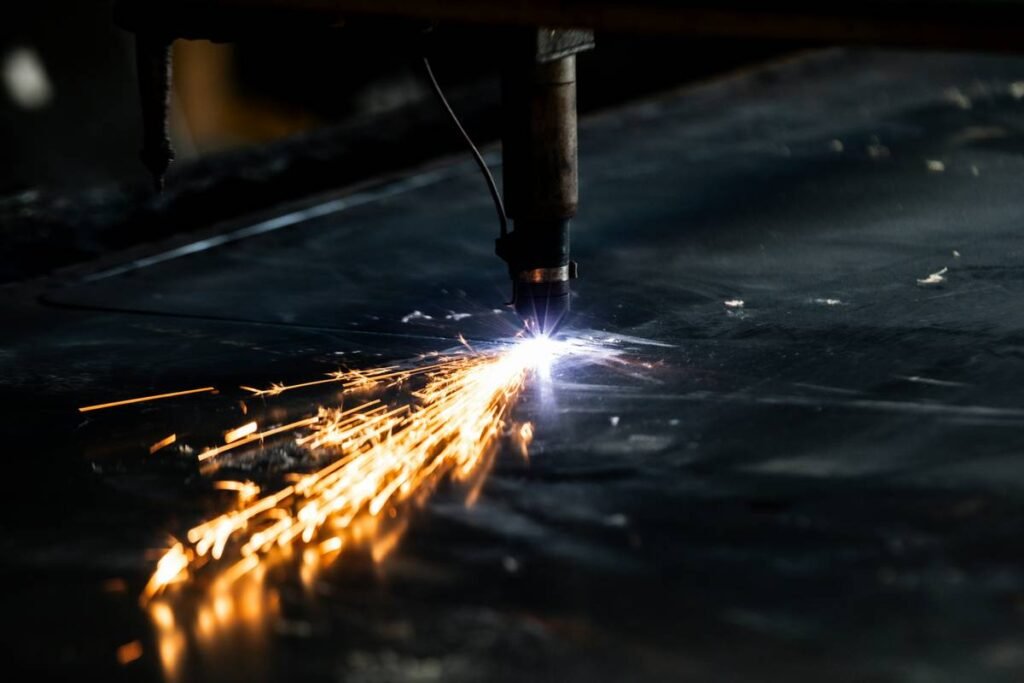
Enter plasma arc machining—a process that uses ionized gas (plasma) heated to ~30,000°F to melt and blow away metal. It’s not sci-fi; it’s standard practice in everything from shipbuilding to scrap recycling. And yes, modern inverter-based plasma cutters under $500 now bring this tech to your driveway.
According to the Fabricators & Manufacturers Association (FMA), over 68% of small fabrication shops adopted portable plasma systems between 2020–2023 due to speed and versatility gains. For DIYers, that translates to cutting time reduced by 70% compared to mechanical methods (source: Modern Machine Shop, 2022).
Optimist You: “This unlocks so much creative potential!”
Grumpy You: “Ugh, fine—but only if I don’t have to buy another air compressor.”
Step-by-Step: 10 Practical Applications of Plasma Arc Machining
Can plasma really handle delicate work like automotive brackets?
Absolutely. With proper amperage settings (20–40A for 16–10 gauge steel), plasma cleanly cuts suspension mounts, exhaust flanges, and chassis reinforcements. I recently replaced a rusted-out control arm bracket on my ’98 F-150 using a Hypertherm Powermax 45XP—finished in 8 minutes versus 45 with an angle grinder.
Is it safe for cutting HVAC ducting at home?
Yes—if you ventilate properly. Galvanized steel releases zinc oxide fumes when cut (metal fume fever is no joke). Use a respirator and fans, but know that plasma’s focused arc minimizes heat distortion vs. oxy-fuel, keeping duct seams square.
What about artistic metalwork—like yard sculptures or signage?
This is where plasma sings. Freehand cutting lets you trace stencil patterns onto sheet metal for custom logos, gates, or garden art. Pro tip: Use drag cutting (drag shield touching the surface) at low speed for smooth curves on 14-gauge mild steel.
Can I use it on stainless steel or aluminum?
Yes! Plasma cuts all conductive metals. However, aluminum requires higher pressure clean/dry air or nitrogen to prevent oxidation. Stainless benefits from a “drag cut” technique to avoid dross buildup.
Does it work on rusty or painted metal?
Surprisingly well—unlike lasers, plasma tolerates surface contamination. But expect faster consumable wear. Always remove loose scale first with a wire wheel to maintain arc stability.
Is plasma suitable for demolition or scrap sorting?
100%. Junkyards use high-amperage (100A+) systems to slice car frames, I-beams, and rebar. At home, it’s perfect for dismantling old machinery or cutting scrap for recycling.
Can I cut holes or internal shapes?
Yes—with pierce techniques. Start outside the material, then ramp down into your hole location to avoid double-arcing. Never plunge directly into thick metal without ramping.
How does CNC plasma expand home applications?
Desktop CNC plasma tables (like those from Langmuir Systems) let you fabricate replacement parts, brackets, or even architectural panels from DXF files. Precision within ±0.015″ is achievable.
What about farm and ranch repairs?
From fixing tractor buckets to modifying livestock gates, plasma handles rough, outdoor-grade steel faster than any alternative. Bonus: battery-powered models now run off tractor PTO generators.
Any industrial crossover uses for serious DIYers?
Think custom tool racks, welding jigs, or even go-kart chassis. If it’s metal and needs shaping, plasma likely cuts it cleaner and faster.
7 Best Practices for Clean, Safe Cuts at Home
- Match amperage to thickness: Rule of thumb—1A per 0.001” of steel. Cutting ¼” plate? Use 25–30A.
- Use clean, dry air: Moisture causes erratic arcs and nozzle pitting. Install a refrigerated air dryer if humid.
- Keep consumables fresh: Worn electrodes cause wandering arcs. Replace after 1–2 hours of continuous cutting.
- Maintain standoff distance: Most handheld units perform best at 1/8”–1/4” above the workpiece.
- Preheat thick material: For steel over ¾”, preheat to 200°F to prevent cracking (yes, even with plasma).
- Always ground properly: Clamp directly to the workpiece—not the table—to avoid stray arcs.
- Wear UV-rated eye protection: Plasma emits intense UV light. Shade #8 minimum for handheld units.
Terrible Tip Disclaimer: “Just crank up the amps and blast through!” Nope. Over-amperage on thin metal = molten craters and wasted metal. Dial it in.
Case Study: From Rusty Gate to Backyard Sculpture
Last spring, my neighbor’s wrought-iron driveway gate collapsed after decades of rust. Instead of replacing it ($2,200 quote!), I offered to rebuild it with salvaged steel and my plasma cutter.
Process:
- Disassembled gate frame with plasma (cut time: 22 minutes)
- Designed new scrollwork pattern in SketchUp, printed 1:1 stencils
- Plasma-cut decorative elements from 1/8” mild steel at 35A
- Beveled edges with flap disc for smoother welds
- Reassembled and powder-coated
Result: A custom gate that cost $187 in materials, took 14 hours total, and earned me three referral jobs. The secret? Knowing exactly how plasma behaves on aged, uneven metal—and adjusting speed/amperage on the fly.
FAQs About Plasma Arc Machining
What materials can NOT be cut with plasma?
Non-conductive materials like wood, plastic, glass, or concrete won’t work—plasma requires electrical conductivity to form an arc. Also avoid lead or cadmium-coated metals (toxic fumes).
How thick can a hobbyist plasma cutter go?
Most 40–50A home units cut cleanly up to ¾” mild steel, with severance cuts (rough) up to 1.25”. Industrial systems exceed 6”.
Does plasma cutting warp thin metal?
Less than oxy-fuel, but yes—use intermittent cutting, cooling breaks, and clamping for sheets under 16 gauge.
Can I use a plasma cutter indoors?
Only with serious ventilation: downdraft tables or external exhaust rated for metal fumes. Never in enclosed garages without airflow.
Are plasma cutters expensive to maintain?
Not really. Consumables (nozzles, electrodes) cost $2–$8 each and last 100–500 starts depending on usage. Annual upkeep averages $120 for moderate DIY use.
Conclusion
The applications of plasma arc machining stretch far beyond factory floors—they empower home metalworkers to repair, create, and innovate with industrial-grade precision. Whether you’re restoring classic cars, building custom furniture, or turning scrap into art, plasma delivers speed, versatility, and surprisingly clean cuts when used right.
Remember: expertise comes from doing, not just reading. Start small, respect the arc, and soon you’ll wonder how you ever cut metal without it.
Like a Tamagotchi, your plasma cutter thrives on attention—feed it clean air, change its diapers (consumables), and it’ll love you back in flawless cuts.
Whirrrr-zap… beep-boop…*
Metal dreams take shape,
Plasma arc hums hot and true—
Garage becomes forge.