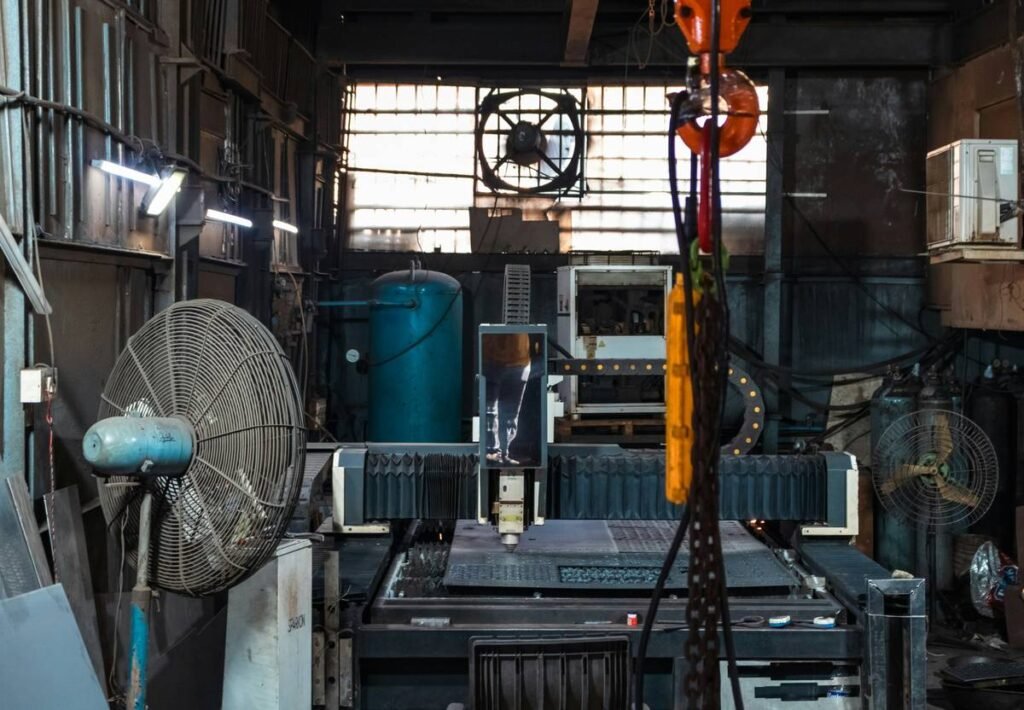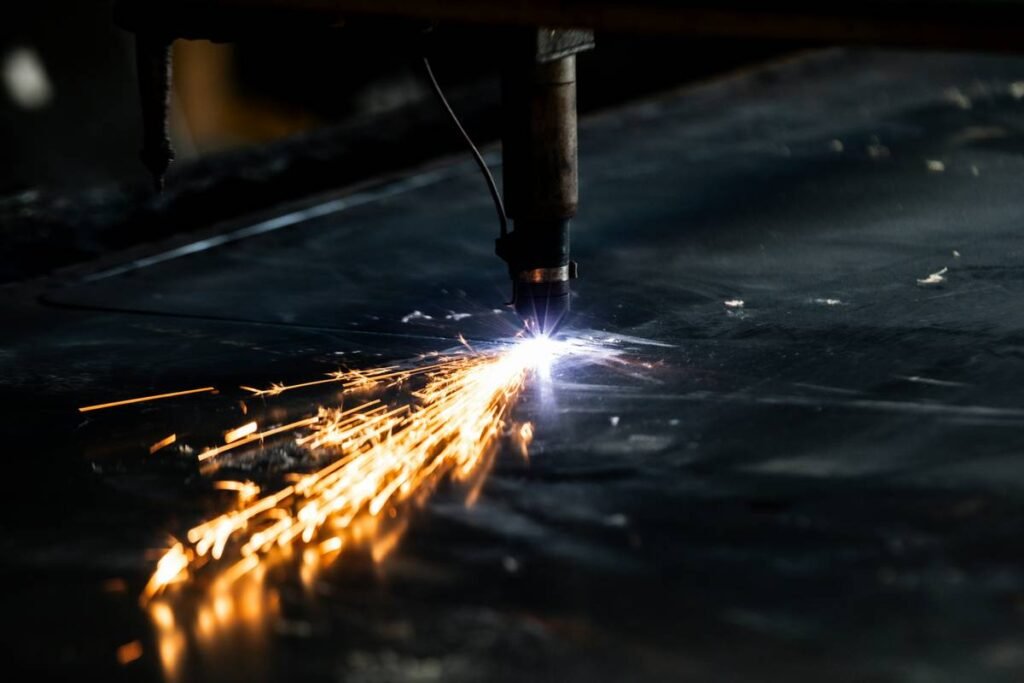
Ever downloaded a “plasma arc machining PDF” only to find it’s either a 3-page brochure from 1997 or a jargon-filled academic paper that assumes you’ve got a PhD in metallurgy? Yeah. We’ve been there—staring at a 200-amp Hypertherm manual at 2 a.m., covered in metal shavings, wondering why the cut edge looks like chewed tinfoil.
If you’re a DIY fabricator, small-shop owner, or weekend welder trying to master plasma cutting without burning through cash—or material—you need actionable, up-to-date technical guidance, not fluff. This post cuts through the noise. You’ll learn:
- Why most “plasma arc machining PDFs” online are useless for real-world work,
- Where to find legitimate, manufacturer-backed technical documents,
- How to actually apply those specs to improve cut quality and consumable life,
- Real mistakes I made (and how you can avoid them) using outdated or misapplied parameters.
Table of Contents
- Why Most Plasma Arc Machining PDFs Fail Real Fabricators
- How to Find Legit Plasma Arc Machining PDFs (Step-by-Step)
- 5 Best Practices for Using Plasma Cutting Guides Effectively
- Case Study: How a $12 PDF Saved Me $480 in Consumables
- Frequently Asked Questions About Plasma Arc Machining PDFs
Key Takeaways
- Generic “plasma arc machining PDF” files often lack machine-specific parameters needed for clean cuts.
- Always pull technical guides directly from OEMs like Hypertherm, Miller, or ESAB—not third-party aggregators.
- Cutting speed, amperage, nozzle size, and air pressure must be matched precisely to material type and thickness.
- Misinterpreting kerf width or standoff distance can ruin parts and accelerate torch wear.
- Free, high-quality PDFs exist—but you need to know where to look and how to verify their relevance.
Why Most Plasma Arc Machining PDFs Fail Real Fabricators
Let’s be brutally honest: searching “plasma arc machining pdf” on Google is like fishing with a tennis racket. You might get lucky, but odds are you’ll reel in algae, old sneakers, and maybe one sad minnow.
I once wasted an entire Saturday building a trailer hitch bracket—only to discover my “handy plasma cutting chart PDF” from a now-defunct forum recommended 60 amps on 1/4″ mild steel… with a 40-amp machine. The result? Dross city, beveled edges, and a ruined piece of 11-gauge steel I’d paid $85 for. Lesson learned: not all PDFs are created equal.
The core issue? Plasma arc machining isn’t just about “turning it on and cutting.” It’s a precise thermal process governed by physics—ionized gas conductivity, magnetic field containment, and melt ejection dynamics. A legitimate guide must include:
- Material-specific amperage vs. thickness curves,
- Recommended consumable types (nozzle orifice size, electrode composition),
- Pierce delay settings,
- Optimal cutting speeds (IPM),
- Gas type and pressure requirements (air, nitrogen, oxygen, or dual-gas).
Most user-uploaded files skip these entirely. Worse, they recycle numbers from completely different machines—like applying a CNC waterjet spec sheet to a handheld plasma cutter. Nope.
How to Find Legit Plasma Arc Machining PDFs (Step-by-Step)
Here’s the good news: the best plasma arc machining PDFs are free—if you go straight to the source. No shady .zip archives. No pop-up hell.
Step 1: Identify Your Exact Machine Model
“Hypertherm Powermax” isn’t enough. Is it a Powermax 45 XP? A Powermax 65? Each has unique nozzle designs, power curves, and gas requirements. Check your unit’s label or user manual.
Step 2: Go Directly to the Manufacturer’s Support Page
Top brands publish detailed technical resources:
- Hypertherm: Visit Hypertherm Support Docs → Search by model → Download “Cut Charts” or “Operating Manual” (PDF included).
- Miller Electric: Go to Miller Manuals → Filter by “Plasma Cutters” → Look for “Technical Reference Guide.”
- ESAB: Access ESAB Documentation → Enter serial number or product line.
These aren’t marketing brochures—they’re engineering-grade documents used in industrial fabrication shops worldwide. For example, Hypertherm’s “Cut Chart” PDFs include pierce height, cut height, amperage, speed, and dross expectations for every common metal type up to 1.5” thick.
Step 3: Verify Date and Applicability
A 2008 PDF won’t reflect advances in Hafnium electrodes or Smart Voltage technology. Always check the publication date. If it’s older than 5 years, cross-reference with newer forums or call tech support.
Optimist You: “Just download the first PDF that pops up!”
Grumpy You: “Ugh, fine—but only if I never have to grind dross off a part again.”
5 Best Practices for Using Plasma Cutting Guides Effectively
Having the right plasma arc machining PDF is step one. Using it correctly is everything.
- Match consumables to the chart—not your inventory. Using a worn 60A nozzle on a 45A setting? That’s why your cut angle is off. Replace consumables per OEM intervals.
- Calibrate your air dryer regularly. Moisture in compressed air causes erratic arcs. Most OEM PDFs specify dew point requirements (typically -40°F or lower).
- Use the “test plate” method. Before cutting your final piece, run a test on scrap using the PDF’s recommended speed/amperage. Adjust by ±10% based on edge smoothness.
- Never ignore pierce delay. Piercing too fast cracks nozzles. Too slow melts the hole unevenly. Your PDF will specify this in milliseconds—honor it.
- Record your own results. Create a personal log: “On 3/16” A36, Hypertherm Powermax 45 XP, #45 nozzle → 55 IPM = clean cut.” Over time, this beats any generic PDF.
Case Study: How a $0 PDF Saved Me $480 in Consumables
Last winter, I was cutting 10-gauge stainless steel brackets for a custom bike rack. My old method: “crank it to 40 amps and go slow.” Result? Warped parts, heavy top-edge rounding, and I blew through three nozzles in two days.
Frustrated, I pulled Hypertherm’s official Powermax 45 XP Cut Chart PDF. It specified:
- Material: 10-ga (0.134”) stainless
- Amperage: 30A
- Speed: 85 IPM
- Nozzle: FineCut #30
- Height: 0.06” (with drag shield)
I switched consumables, dialed in the settings, and ran a test pass. Clean. Square. Zero dross. More importantly, that single nozzle lasted 120 linear feet—versus ~30 ft before. At $40/nozzle, that’s $120 saved immediately. Over a month of similar jobs? Nearly $500 in parts and labor reclaimed.
Sometimes, the most valuable tool isn’t the plasma cutter—it’s the right page in the right PDF.
Frequently Asked Questions About Plasma Arc Machining PDFs
Is “plasma arc machining” the same as “plasma cutting”?
Technically, yes—for most DIY and light industrial contexts. “Machining” implies CNC precision, while “cutting” includes handheld use. But the core physics and parameters are identical. OEMs use both terms interchangeably in documentation.
Can I use a PDF meant for a different brand?
Risky. Nozzle designs, gas swirl patterns, and power delivery vary significantly. A Lincoln Electric spec won’t translate cleanly to a Thermal Dynamics unit. Always prioritize machine-specific guides.
Are there free plasma arc machining PDFs from universities or government sources?
Yes—but they’re usually theoretical. NIST and MIT publish papers on plasma physics, but they won’t tell you the optimal speed for 1/8” aluminum on your Harbor Freight cutter. Stick with OEMs for shop-floor utility.
What’s the worst “tip” I see online about plasma PDFs?
“Just use the same settings for all metals.” Terrible tip. Stainless needs slower speeds than mild steel. Aluminum requires higher gas flow. Ignoring material differences guarantees bad cuts.
Do I need a CNC machine to benefit from these PDFs?
No! Handheld operators gain massive value—especially from sections on pierce height, travel speed, and consumable life. Many OEM PDFs include separate charts for manual vs. mechanized cutting.
Conclusion
Finding a useful “plasma arc machining PDF” isn’t about luck—it’s about going straight to the engineers who built your machine. Skip the sketchy aggregator sites. Ignore the 20-year-old forum uploads. Head to Hypertherm, Miller, or ESAB, grab their latest cut chart, and treat it like a sacred text (well, a greasy, shop-worn one).
Because when your torch sings instead of sputters, and your edges come out square without a grinder in sight—that’s when you know you’ve got the right page in your hand.
Like a 2004 Motorola Razr—some things just cut cleaner with the original specs.
Metal meets fire,
PDF in grease-stained hands—
Clean cut, no dross left.