You’ve got a rusted trailer frame, a busted exhaust bracket, and half a dozen scrap-metal projects piling up in your garage. You need to cut, weld, and grind—but buying three separate machines eats budget, space, and sanity. A multiprocess welder with plasma cutter promises to solve it all. Yet 70% of first-time buyers end up frustrated. Not because the machine fails—but because they chose wrong.
The Core Problem: Why Standalone Tools Fail Modern DIYers
Dedicated stick welders sit idle 80% of the time. Plasma cutters gather dust after one weekend job. And TIG rigs? Too finicky for quick farm repairs. The real issue isn’t capability—it’s context.
Most hobbyists and small-shop fabricators don’t need industrial-grade specialization. They need speed, versatility, and clean cuts on thin steel without blowing a $3,000 budget.
And here’s the kicker: Many “multiprocess” units market themselves as 4-in-1 wonders—but their plasma circuits are underpowered, forcing you to drag-cut instead of slice through 1/2-inch plate like butter.
How to Choose & Use a Multiprocess Welder with Plasma Cutter—Without Wasting Money
Forget specsheets. Focus on real-world output. Below is what actually matters when comparing machines:
| Feature | Budget Tier (<$1,200) | Mid-Tier ($1,200–$2,500) | Pro Tier (>$2,500) |
|---|---|---|---|
| Plasma Cutting Amps | 20–30A (max 3/8″ clean cut) | 40–50A (cuts 1/2″ effortlessly) | 60A+ (handles 3/4″+ with drag shield) |
| Duty Cycle @ 200A | 20–30% | 40–60% | 60–100% |
| Inverter Efficiency | Basic IGBT, runs hot | Mosfet+IGBT hybrid, cooler operation | Fully digital control, thermal protection |
| Real-World Reliability | Fails after 6 months heavy use | Survives 2-year shop abuse | Built for daily commercial duty |
Check the Plasma Air Requirements
Many buyers overlook this. A 40A plasma cutter needs at least 5 CFM at 90 PSI. Your old pancake compressor? It tops out at 2.6 CFM. You’ll stall mid-cut every time. Pair your unit with a proper two-stage air compressor—or go for an integrated model with a built-in air tank (rare, but worth hunting).
Verify True Multiprocess Capability
“Multiprocess” can mean MIG/TIG/stick only—with plasma as a bolt-on accessory. Insist on a single-unit design where plasma shares the same power core. That’s how you get stable arc starts and consistent voltage during long cuts. Look for machines with dual-voltage input (120V/240V)—critical if you’re working between home garage and job site.
Test the Pilot Arc System
Non-touch pilot arcs let you cut rusty, painted, or uneven metal without direct contact. Skip this, and you’ll spend more time cleaning surfaces than cutting. High-end units use high-frequency start; cheaper ones rely on blowback ignition—which wears tips faster. Ask for service schematics before buying. If the brand won’t share them? Walk away.

The Industry Secret: It’s Not About the Machine—It’s About the Workflow
Here’s what no sales rep tells you: The biggest time-sink isn’t switching tools—it’s repositioning your workpiece.
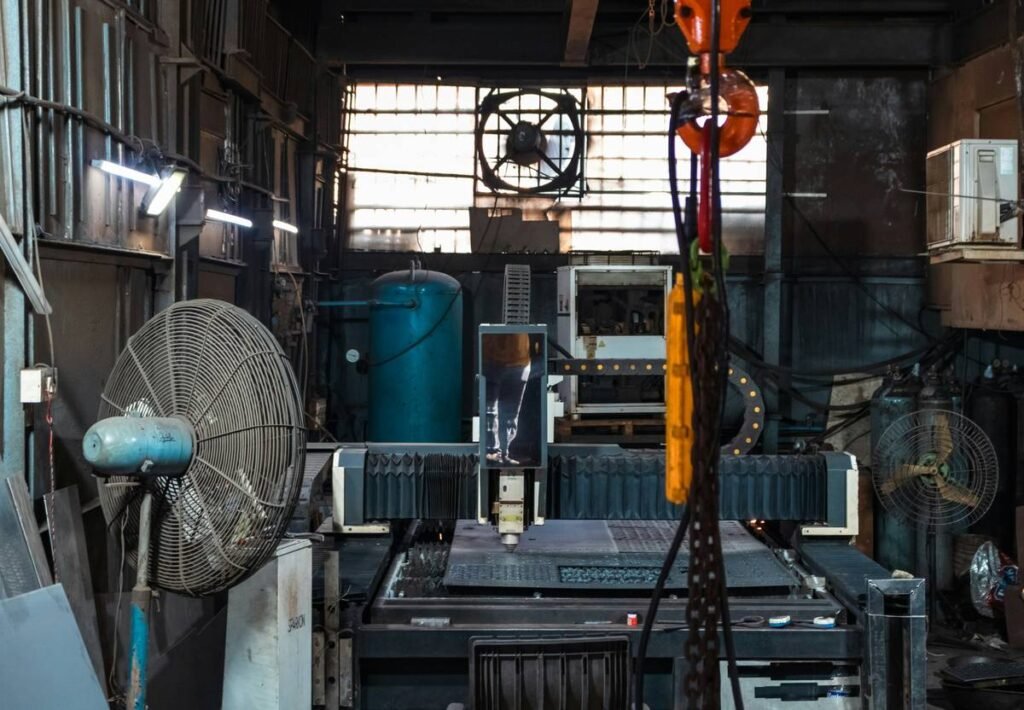
Smart shops mount their multiprocess welder with plasma cutter on a wheeled cart beside a magnetic parts tray and grounded workbench. One setup handles cutting, grinding (with angle grinder mounted nearby), and welding—all without moving the metal.
Think about it: You plasma-cut a bracket, flip it, tack-weld in place, then finish weld—all in under four minutes. That’s 3x faster than dragging three machines across the shop floor. The secret isn’t horsepower. It’s flow.
And yes—some brands quietly overrate their plasma amps. A “50A” unit might only sustain 42A continuously. Always demand third-party test logs, not marketing brochures.
FAQ
Can a multiprocess welder with plasma cutter run on 120V household outlets?
Only for light tasks. Most deliver full plasma performance at 240V. At 120V, you’ll max out around 20A—enough for 1/8″ steel, not thicker plates.
Do I need separate gas for plasma cutting?
No. Most use compressed air. Only high-end CNC systems require nitrogen or oxygen mixes. For DIY, shop air works fine—if dry and oil-free.
Is TIG functionality worth it on these combo units?
Only if you’re doing aluminum or precision stainless work. For mild steel repairs, stick or MIG is faster. Don’t pay extra for TIG unless you truly need AC balance control.